In the winter of 2002, a homeless man made a grim discovery while scavenging for food in rubbish bins in North London. While searching for something to eat, he discovered the dismembered body parts of two women wrapped in black plastic bin-liners in Camden.
The two victims were later identified as Bridgette Maclennan and Elizabeth Valad, who had been brutally tortured and killed. It was a discovery that shocked Londoners and led to a huge Metropolitan Police investigation which led them to arrest Anthony Hardy a week later.
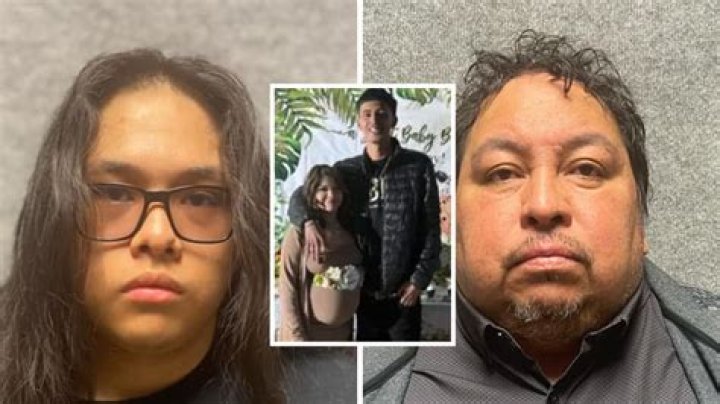
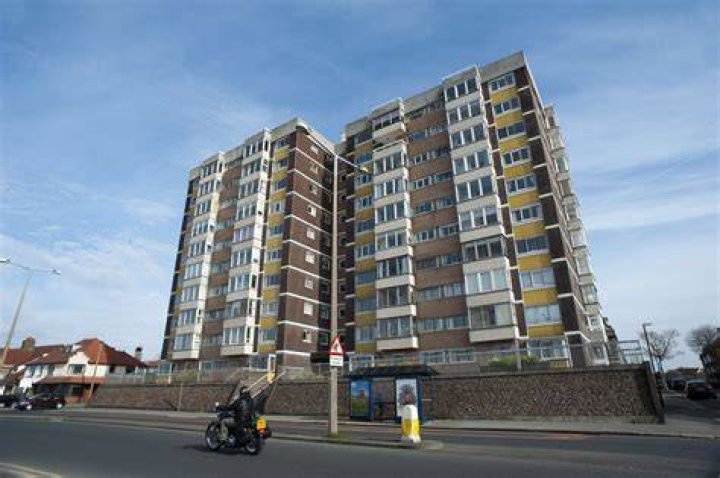
Known as the ‘Camden Ripper’ due to his fascination with Jack the Ripper, the sadistic serial killer murdered three women in 2002, but is widely expected to be responsible for other gruesome killings. In 2003, he was given a whole-life order and died in prison in 2020, having served 17 years behind bars. His terrifying legacy however continues to live on as local residents on the College Place Estate grapple with the building’s horrific past, which has been dubbed the ‘House of Horrors’.
READ MORE:Body fished from river 'could be the man who stabbed woman, 53, to death'
Who was Anthony Hardy?
The depraved predator was born to a family in Burton upon Trent in Staffordshire in 1951, and according to all accounts, led an uneventful childhood. After excelling at school, he earned an engineer’s degree from Imperial College London and went on to become a manager at a large company.
He married and fathered four children but was arrested in 1982 in Tasmania for trying to drown his wife. While charges were dropped, she filed for divorce in 1986 with Hardy later spending a significant amount of time in mental hospitals.
After being diagnosed with bipolar disorder, he was treated at a number of psychiatric hospitals across London for psychosis, alcohol abuse and depression. He also began accumulating a significant criminal record for theft and being drunk and disorderly. In 1998, he was arrested after a prostitute accused him of raping her but these charges were later dropped due to lack of evidence.
Murder of Sally White
In January 2002, Hardy was living in a block of flats on the College Place Estate in Camden Town. Police were called by his neighbour who complained that her front door had been vandalised and that she strongly suspected Hardy. When officers questioned him, they discovered a locked door in his flat and despite his claims that he had no key, they managed to open the door and found the dead body of a woman.
She was found with cuts and bruises to her head and was later identified as Sally White, a 38-year-old prostitute who had been living in London. Despite the circumstances, Hardy was not charged with her murder. Forensic pathologist Freddy Patel concluded that White had died from natural causes, namely a heart attack.
His findings later came under scrutiny and he was eventually suspended from the government’s register of pathologists. In 2012, his name was removed from the medical register, meaning he can no longer practice medicine in the UK.
Hardy claimed that he had no knowledge of how White had come to be in his flat, due to his alcohol problem. He pleaded guilty to causing criminal damage to his neighbour’s door and was transferred to a psychiatric hospital, where he remained until November 2002.
‘The Camden Ripper’
After the discovery of the dismembered body parts on December 30, police officers identified Hardy as a key suspect due to his past history and his close proximity to the scene of the crime. Both of his victims, Bridgette MacClennan, 34, and Elizabeth Valad, 29, had been cut up with an electric saw before they were dumped in nearby bins.
Hardy went on the run while his mugshot was plastered over London newspapers. He was spotted by an off-duty police officer after he went to University College Hospital to collect his prescription for insulin a week later. A fight ensued as he attempted to avoid arrest, with one police officer knocked unconscious and the other stabbed through the hand and dislocating his eye.
Despite his injuries, the police officer managed to hold Hardy until backup arrived and he was taken into custody. During his police interviews, he answered ‘no comment’ to all questions and was charged with all three murders.

A search of his flat had found evidence such as old blood stains that indicated that MacClennan and Valad had been killed over the Christmas holidays and dismembered at the property. While refusing to cooperate with the police, Hardy dramatically changed his plea to guilty on all three counts of murder and was sentenced to a whole life order. He died in prison after contracting Covid-19 in November 2020, aged 69.
Links to other murders
Following his arrest, there was speculation that police believed Hardy to be responsible for a number of unsolved cases where sex workers had been murdered. One case was that of 24-year-old Zoe Parker, whose dismembered torso was found in the River Thames in December 2000.
She had last been seen in Hounslow and was seen talking to two men the night she went missing. Her incomplete body was found next to Chelsea Harbour with investigators believing that she had been cut up with a weapon similar to a Samurai sword. While there were notable similarities between her murder and those of Hardy’s victims, there was not enough evidence for him to be formally charged.
In 2013, a high profile criminologist also examined claims that Hardy could be linked to the murders of London sex workers Sharon Hoare in 1991 and Christine McGovern in 1995.
Want more from MyLondon? Sign up to our daily newsletters for all the latest and greatest from across London here.
READ NEXT: